

Understanding Temporary vs Permanent Vehicle Security Measures
Choosing between temporary and permanent vehicle security measures depends on how the site is used, how long protection is needed and the level of risk involved. Temporary systems are designed for short-term or changing environments where barriers may need to be installed quickly, moved easily and removed once the site returns to normal. Permanent systems are better suited to locations that need continuous protection, controlled access and long-term integration with the surrounding infrastructure.
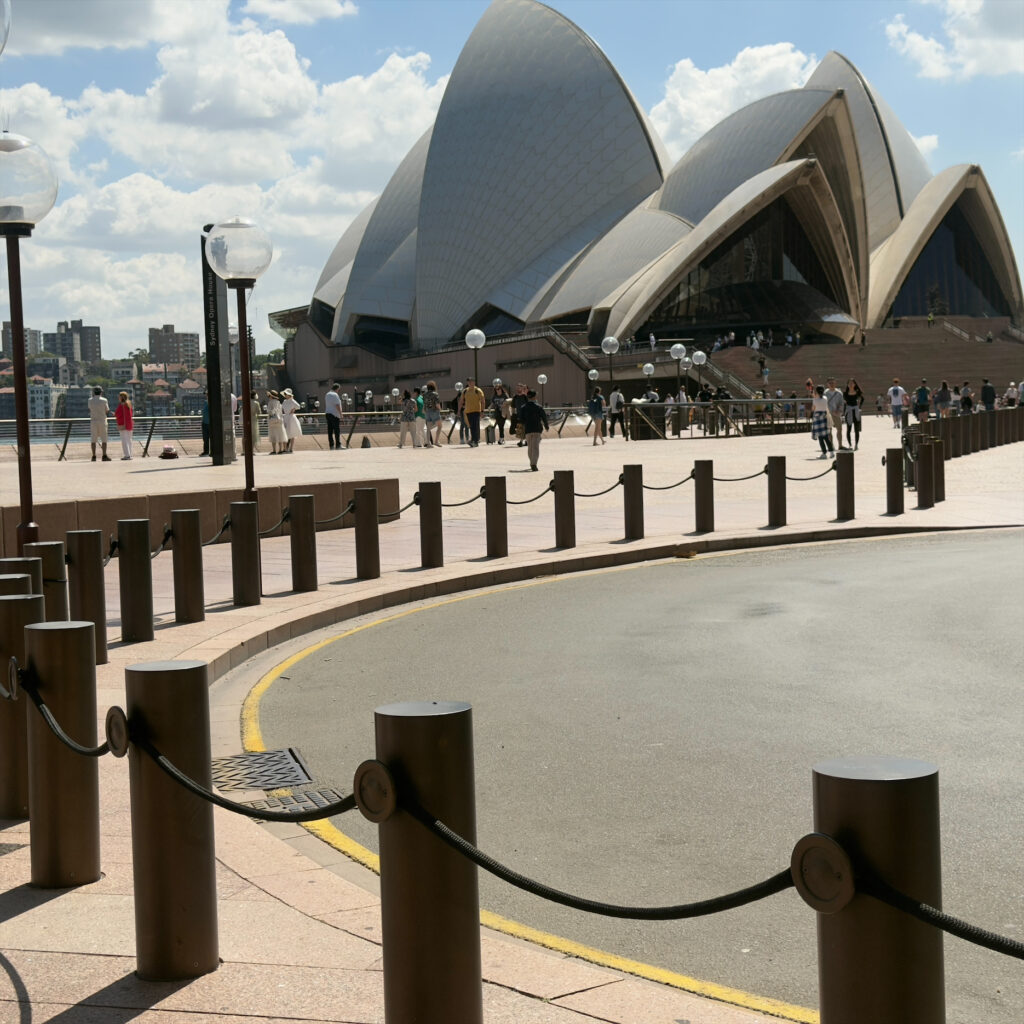 Both options can form part of a broader hostile vehicle mitigation strategy. Hostile vehicle mitigation, or HVM, is about reducing the risk of vehicle threats, including unauthorised vehicle access, accidental impact and deliberate vehicle attacks. For many sites, protection works best when physical barriers, bollards, gates and access control are planned together. This allows a site to manage vehicle risk while still keeping pedestrian routes, authorised vehicle access and emergency access functional.
When Temporary Vehicle Security Measures Are the Best Choice
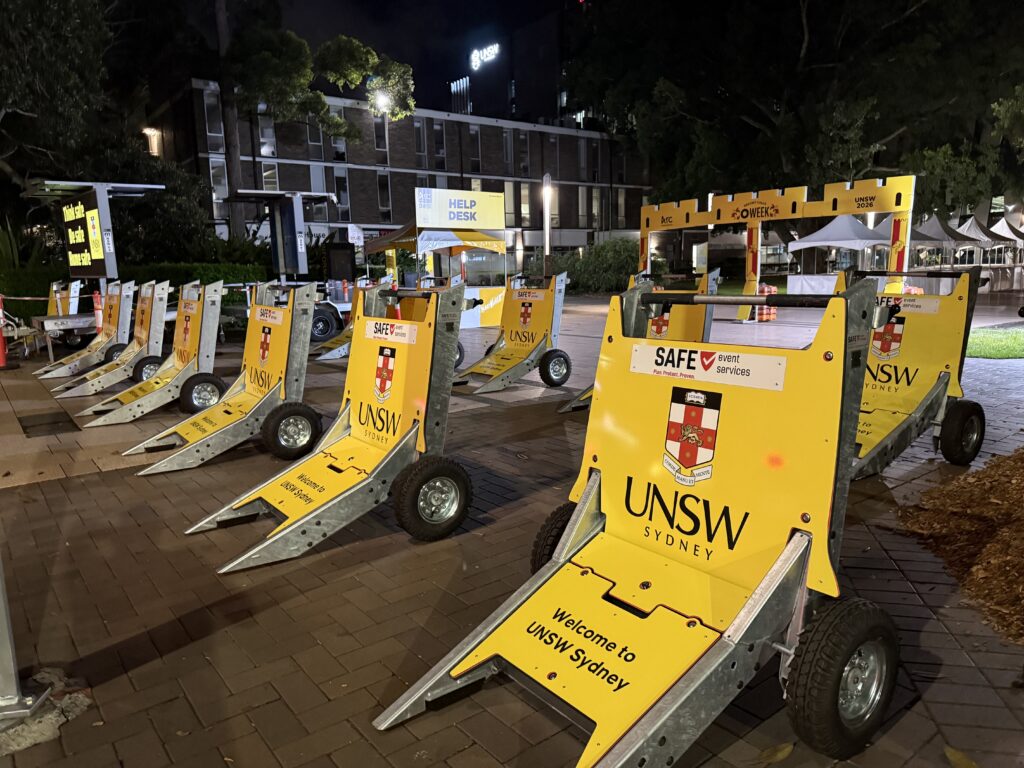
Temporary vehicle security measures are often the most practical option when a site needs protection for a limited period or when the layout may change. This includes festivals, sporting events, road closures, construction sites, emergency response areas and temporary public gatherings. These sites often have changing access requirements, short setup windows and a need to balance public safety with pedestrian flow, deliveries and authorised vehicle access.
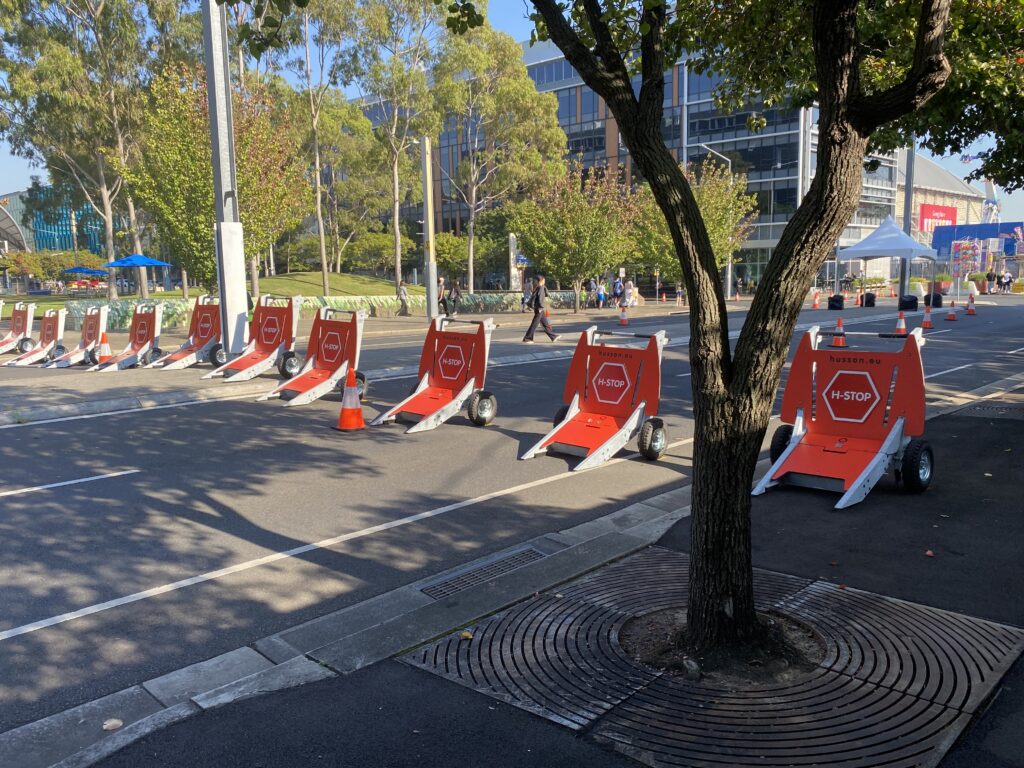
They are also useful where permanent installation is not practical, such as council-owned spaces, event precincts, suspended slabs or areas where excavation may interfere with underground services. In these situations, surface-mounted products can provide protection without permanent foundations. For example, Ezi Security’s H-Stop® HVM Barrier is designed for rapid deployment, with no foundations, fixtures or fittings required.
When Permanent Vehicle Security Measures Provide Greater Protection
Permanent vehicle security measures are generally the right choice for sites that need ongoing protection every day. Airports, government facilities, logistics hubs, data centres, utilities and commercial buildings often have fixed access points, high-value assets and regular vehicle movement. In these environments, security needs to be built into the site rather than added temporarily.
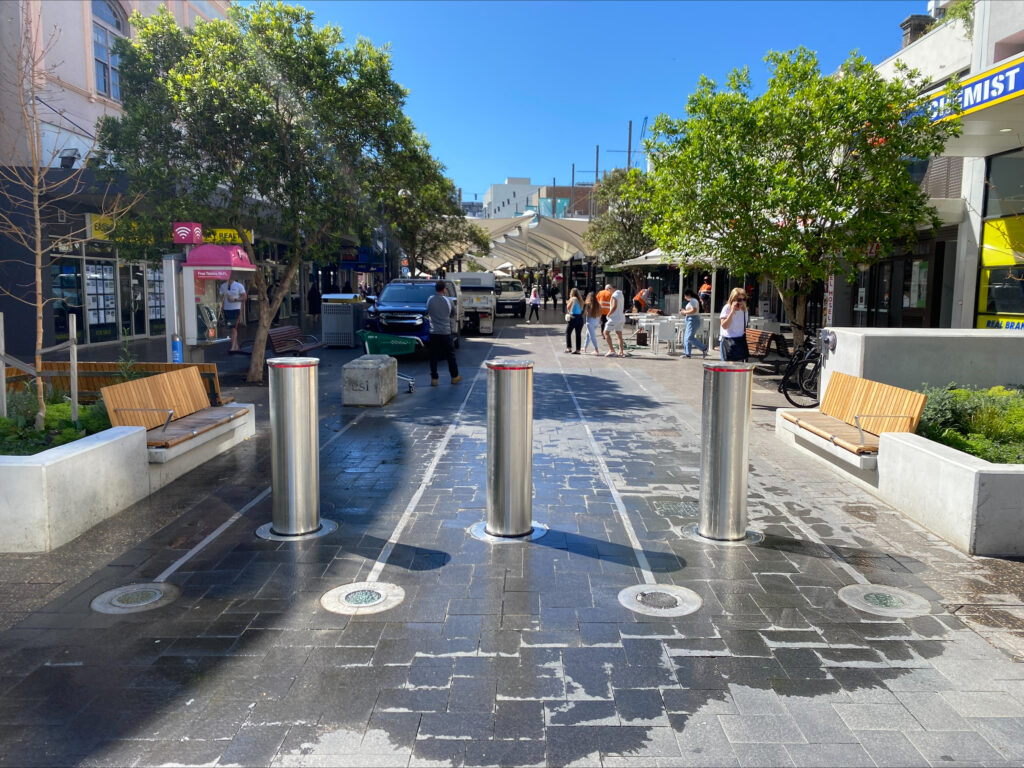
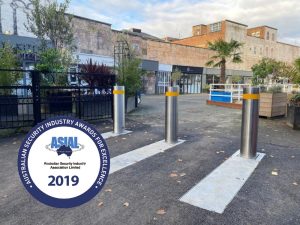 Permanent HVM solutions may include crash-rated bollards, road blockers and wedge barriers, depending on the level of risk and the way the site operates. Ezi’s range includes the Truckstopper 7-40, Truckstopper 6-30, Truckstopper 17 and Truckstopper 9-40, as well as the Carstopper 30 and Wedge II, providing long-term perimeter protection and high-impact resistance across a range of site requirements.
Vehicle Gates: Permanent Access Control for High-Security Sites
Vehicle gates are an important part of permanent perimeter protection because they help control who can enter a site while creating a physical barrier against unauthorised vehicles. For industrial facilities, logistics yards, government sites and commercial properties, automatic vehicle gates can support both security and daily traffic management.
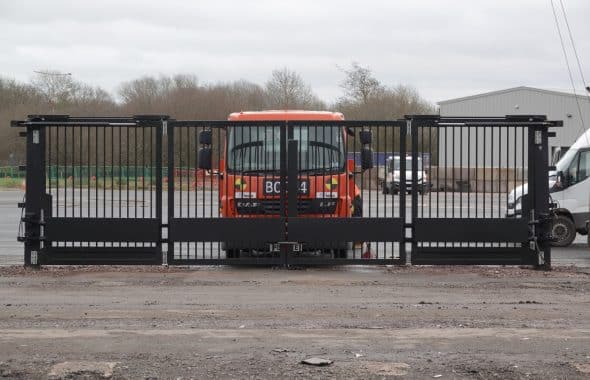 Gate selection depends on the width of the entrance, how often vehicles enter, how quickly the gate needs to operate and whether crash-rated protection is required. Ezi Security’s range includes industrial sliding gates for wide entrances, swing gate systems, PAS 68 crash-rated gates and high-speed bi-folding options such as the Rapide system.
For higher-risk sites, a crash rated gate can form part of the wider hostile vehicle mitigation strategy, particularly where the entrance must allow authorised access while resisting unauthorised vehicle entry.
Comparing Temporary & Permanent Security Solutions
A simple way to compare temporary and permanent security measures is to look at how long protection is needed, how often vehicles require access and whether the system needs to be moved later.
| Factor | Temporary Security Measures | Permanent Security Measures |
| Best suited to | Events, road closures, construction sites and changing work zones | Facilities, critical infrastructure, logistics sites and fixed access points |
| Installation | Faster to deploy and remove | Requires more planning and installation |
| Mobility | Can often be relocated or reused across different sites | Designed to stay in place long term |
| Access control | Useful where access needs may change during the project or event | Better for regular vehicle movement and controlled entry points |
| Long-term value | Practical for short-term or seasonal security needs | More suitable where the same perimeter needs protection every day |
| Security role | Adds flexible protection where and when it is needed | Provides ongoing protection as part of fixed perimeter infrastructure |
Before choosing a solution, organisations should consider project duration, threat level, available space, maintenance requirements, access needs and future site plans.
Can Temporary and Permanent Solutions Work Together?
Some sites benefit from using temporary and permanent solutions together. A site may already have permanent crash-rated gates, bollards or road blockers in place, but still need extra protection during a special event, maintenance project or elevated threat period.
For example, a facility with permanent vehicle gates may use portable H-Stop® HVM Barriers to create an extra layer of protection while works are carried out near an entrance. A permanently secured precinct may also use temporary hostile vehicle mitigation barriers during a festival, sporting event or public gathering to manage changed pedestrian flows, road closures and authorised vehicle access.
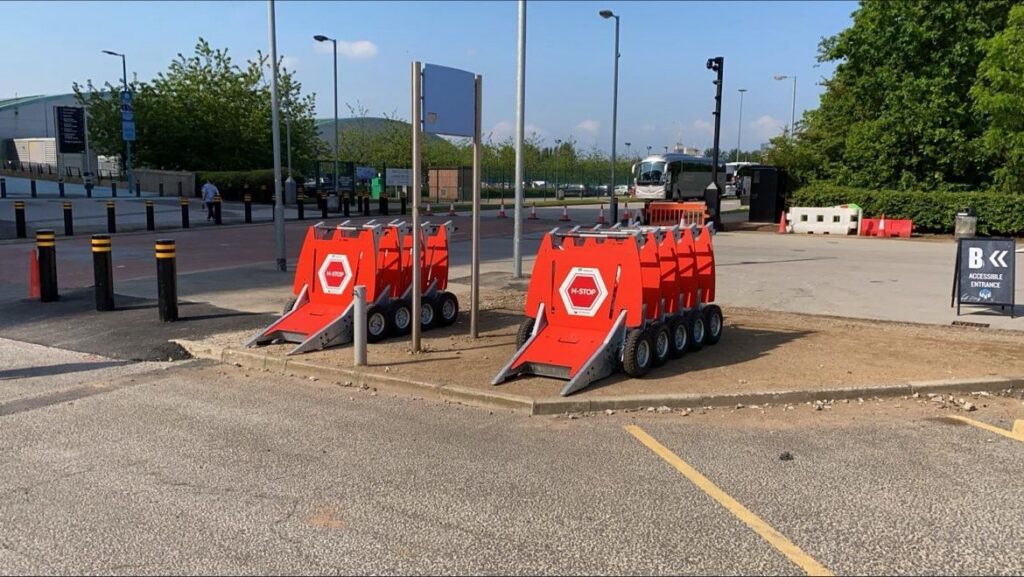 This approach allows permanent infrastructure to protect the site day to day, while temporary HVM products can be added for changed traffic conditions, event overlays or short-term risk periods.
Choosing the Right Vehicle Security Solution for Your Site
The right vehicle security solution should always be based on the site, not just the product. Key factors include the site’s risk profile, traffic volume, available space, regulatory requirements, emergency vehicle access and operational objectives. A busy logistics entrance, for example, will have very different needs from a temporary event road closure or a public plaza with high pedestrian activity.
Frequency of vehicle access is also important. Sites with regular authorised traffic may need automated gates or rising barriers, while areas with limited access may suit fixed, removable or surface-mounted products. Future expansion should also be considered so the selected system does not restrict how the site may need to operate later.
Because HVM products need to suit the site layout, risk level and access requirements, specification should be based on more than product type alone.
Ezi Security designs, manufactures and installs temporary and permanent perimeter security solutions, with HVM products tested to recognised standards including PAS 68, IWA14-1 and ISO 22343-1.
Building a Vehicle Security Strategy That Fits Your Needs
Temporary systems are useful where protection needs to be fast, flexible and removable. Permanent systems are better suited to sites that need ongoing protection, controlled vehicle access and integration with fixed perimeter infrastructure.
The best solution depends on how the site operates, what level of risk needs to be managed and how vehicles, pedestrians and emergency services need to move through the area. In some cases, temporary hostile vehicle mitigation barriers may be enough. In others, permanent bollards, road blockers, automatic vehicle gates or a crash rated gate may be required as part of a broader perimeter security strategy.
Whether the site needs temporary HVM barriers, permanent bollards, road blockers, vehicle gates or a combination of systems, Ezi Security can help assess the access requirements and specify the right protection for the site.
Speak with Ezi Security’s specialists about the right vehicle security solution for your site.