
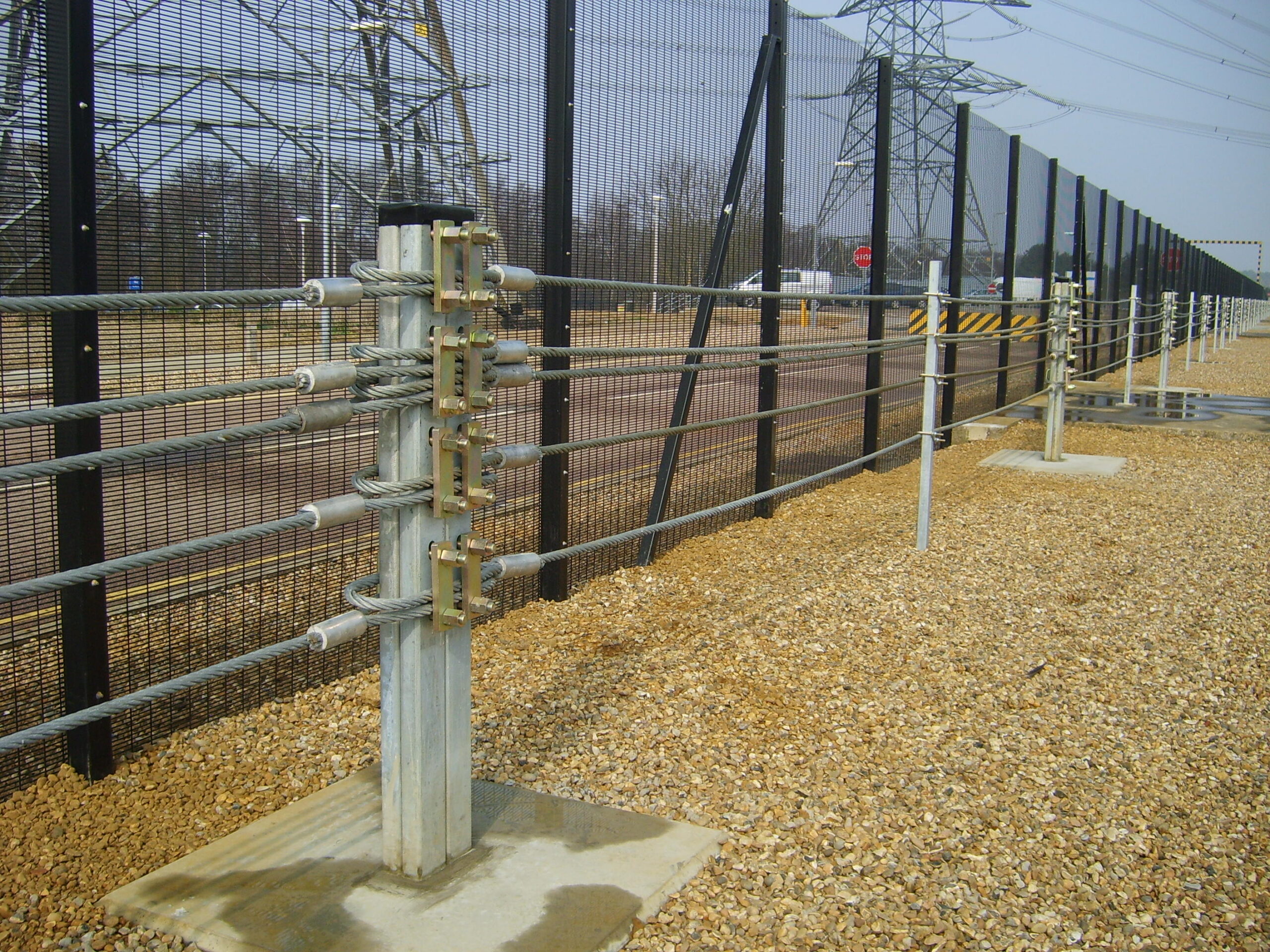
Industrial facilities such as manufacturing plants, warehouses, logistics centres, data centres and distribution sites often need more than a basic fence and gate. Staff, contractors, delivery vehicles and heavy trucks may all move through the site alongside loading areas, valuable equipment and restricted zones.
Effective industrial perimeter security should account for vehicle routes, unauthorised access, pedestrian safety, high-value assets and the need to keep legitimate traffic moving.
1. Start with a Security Risk Assessment
Before choosing gates, bollards or barriers, identify where the site is most exposed. This includes vehicle and pedestrian entry points, approach routes, loading zones, vulnerable perimeter areas and critical assets.
The assessment should also consider how staff, contractors, deliveries and heavy vehicles move through the site. Lower-risk facilities may only need standard perimeter controls, while higher-risk sites may require crash-rated protection or a broader Hostile Vehicle Mitigation (HVM) strategy.
2. Build a Layered Perimeter Security System
A single fence or gate will not address every risk. A layered system may combine security fencing around the boundary with vehicle gates at controlled entrances.
Where vehicle impact is a concern, crash-rated bollards, road blockers or HVM barriers can add another layer of protection. Access control and surveillance can then help manage entry and monitor activity around the perimeter.
3. Secure Industrial Vehicle Entry Points
Main entrances, loading docks and service access points often handle the highest volume of vehicle movement.
Choosing the right industrial security gate depends on opening width, vehicle size, traffic volume, operating speed, available space and required security level.
Ezi’s range includes Industrial Sliding Gate Systems for commercial and industrial entrances, as well as Automatic Swing Gate Systems where sufficient operating space is available. For faster automated access, the IWA14-1 RAPIDE Bi-Folding Speed Gate is suited to high-use vehicle entry points.
4. Protect the Perimeter Against Vehicle Impact
Access control and vehicle impact protection serve different purposes. A standard gate may control authorised entry, but it is not necessarily designed to stop a vehicle travelling at speed.
Where a risk assessment identifies a greater vehicle threat, crash-rated HVM products can help protect entrances, buildings, pedestrian areas and critical infrastructure against accidental or deliberate vehicle intrusion.
Ezi’s HVM range includes Truckstopper systems, WEDGE II, and surface-mounted bollards. Ezi’s product range includes systems tested to recognised standards such as IWA14-1, PAS68 and ISO 22343-1.
5. Separate Pedestrian and Vehicle Movement
Employee walkways, visitor entrances, car parks and loading areas should be planned so people are not unnecessarily exposed to moving vehicles.
Bollards and other physical measures can help define pedestrian zones around buildings and shared access areas while still allowing people to move freely.
Depending on the required access and protection level, options may include Ezi’s RB001-30, RB002-40 or RB003-50 Slimline Rising Bollards.
6. Consider Site Conditions Before Choosing the Installation Method
Underground utilities, concrete slabs, drainage systems and other infrastructure can limit how deeply security products can be installed.
Where traditional foundations are impractical, surface-mounted security solutions or shallow-foundation systems can provide a practical alternative, helping reduce the need for extensive excavation while accommodating existing site constraints.
Considering these conditions early can help identify the most suitable installation method and avoid unnecessary excavation or unsuitable product selection.
7. Control Access Without Disrupting Industrial Operations
Good industrial site security should control unauthorised access without creating unnecessary delays for staff, delivery trucks, contractors or emergency services.
Automated vehicle gates, automatic bollards and rising arm barriers can integrate with remote controls, keypads, automatic sensors and other access-control systems.
The aim is to manage authorised movement efficiently while keeping the perimeter aligned with the site’s existing procedures and traffic patterns.
8. Protect Critical Areas Within the Industrial Site
Protection should not stop at the outer boundary. Loading docks, substations, fuel storage, server rooms, control buildings and high-value storage areas may also need additional protection.
The level of security should reflect the risk profile of each area. Higher-risk zones may require crash-rated bollards or HVM barriers, while controlled-access areas may be better suited to vehicle gates or security fencing.
9. Plan for Future Expansion and Changing Security Risks
Industrial facilities may expand, change traffic routes or introduce larger vehicles over time. Perimeter security should allow for those changes rather than creating future access problems.
Where layouts are likely to change, removable barriers, automated gates and surface-mounted security solutions can provide greater flexibility. H-Stop®, for example, requires no fixtures or fittings and can be removed or reconfigured as access requirements change.
10. Create an Integrated Industrial Perimeter Security Strategy
The strongest industrial perimeter security strategy is not simply the product with the highest rating. It is the combination of fencing, gates, bollards, HVM protection, access control, surveillance and pedestrian separation that matches the site’s actual risks and operations.
Protection can then be concentrated where the consequences of unauthorised access or vehicle impact would be greatest.
Plan Security Around How Your Industrial Site Operates
The most effective perimeter security for industrial facilities starts with understanding how the site is used. Vehicle routes, pedestrian movement, loading areas, critical assets and future expansion should all influence the final design.
With more than 30 years of experience in perimeter security, Ezi Security designs, manufactures and installs integrated systems combining HVM barriers, gates, bollards, fencing and access control.
Strengthen Your Industrial Facility’s Perimeter Security
Every industrial site has different vehicle movements, access requirements and security risks. Ezi Security can assess these requirements and develop an integrated combination of gates, HVM barriers, bollards and perimeter protection systems.
Talk to Ezi Security about your industrial perimeter security requirements.